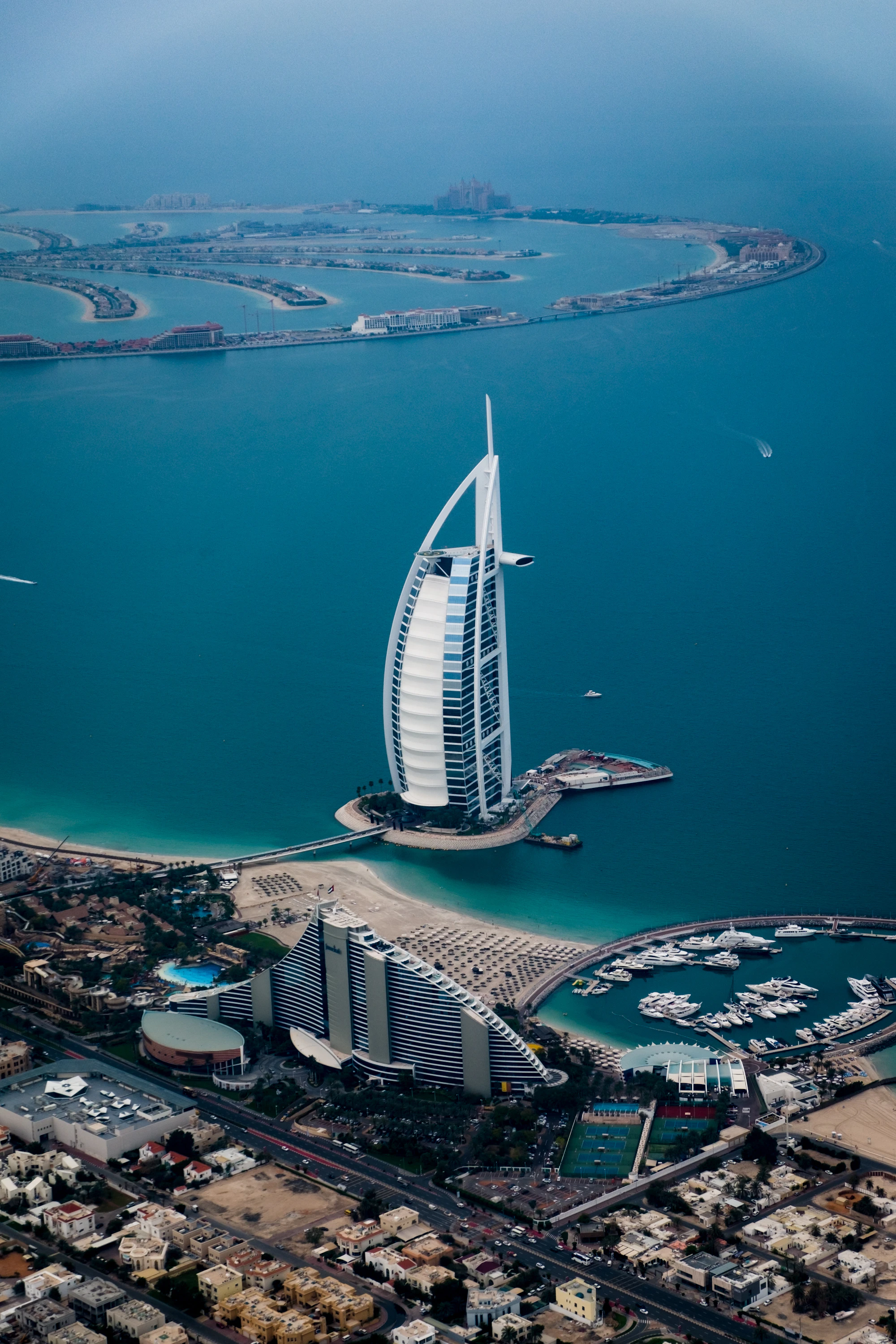
Gulf property attracts foreign buyers for understandable reasons: no property tax in several jurisdictions, residency pathways tied to investment, and rental yields that compare well internationally.
It also catches foreign buyers in ways that are entirely avoidable with the right diligence. This piece is about that diligence.
Regulations differ by emirate and by country and they change. Confirm specifics with the relevant authority — DLD in Dubai, ADREC in Abu Dhabi, the Saudi and Qatari equivalents — or a licensed local adviser, before committing funds.
1. Foreign ownership is zone-specific, not country-wide
The most common early error is assuming "foreigners can buy in Dubai" means foreigners can buy anywhere in Dubai. Ownership rights for non-nationals are generally restricted to designated freehold areas, and those designations vary by emirate and by country.
Before anything else: confirm that the specific plot is in a zone where your nationality can hold the title you think you are buying — freehold, versus a long leasehold or usufruct, which are materially different things.
2. Off-plan is the highest-risk and highest-marketed product
Off-plan sales dominate Gulf marketing because developers need the capital. That is not inherently wrong — it is how much of the region got built — but the risk sits with the buyer in ways that are often underexplained.
What to verify before you sign:
- Escrow. Is the project registered and are payments going into a regulated escrow account rather than to the developer directly? In the UAE this is a legal requirement for registered projects and it is your main protection. Verify it independently rather than taking a salesperson's word.
- Developer track record. Not the brochure. Have they delivered previous projects, on roughly the announced timeline?
- What happens if it is late. Read the actual contractual remedy for delay. "The developer will endeavour to" is not a remedy.
- Payment schedule versus construction milestones. A schedule tied to time rather than to verified construction progress shifts risk onto you.
3. Service charges are the yield killer nobody models
Advertised rental yields in the Gulf are frequently quoted gross. Service charges in premium developments — particularly towers with extensive amenities — can consume a substantial share of that.
What this should change: never evaluate a Gulf property on gross yield. Get the actual current service charge per square foot for that specific building, and model net. Two apartments with identical gross yields can produce very different net returns, and the difference is usually amenity load.
4. Residency linkage is real but should not drive the decision
Investment-linked residency programmes are a genuine benefit and a legitimate part of the calculation. They are also a powerful sales tool, and we regularly see buyers accept a poor asset because the visa was framed as the prize.
The discipline: evaluate the property as a property. If it does not stand up on its own economics, the residency benefit is a discount on a bad purchase, not a reason for it.
5. The market has matured, and that is good for buyers
Regulatory frameworks across the region — escrow requirements, registration, dispute resolution, broker licensing — have tightened considerably over the last decade. Compared with earlier cycles, a careful buyer has meaningfully more protection.
The protection only works if you use it: verify registration, verify escrow, use a licensed broker, and read the contract rather than the brochure.
Country by country
United Arab Emirates. The most mature framework in the region. Designated freehold areas for foreign ownership, escrow requirements for registered off-plan projects, and established registration and dispute channels. Dubai and Abu Dhabi differ in their rules and their regulators — do not read guidance about one as applying to the other.
Saudi Arabia. The fastest-changing market in the region, with foreign ownership rules that have been opening up as part of a broader economic programme. Because the rules are moving, current local advice is worth more here than anywhere else on this list, and older guidance goes stale quickly.
Qatar. Designated zones permit foreign freehold ownership, with residency linkage at certain investment levels. A smaller market than the UAE, with correspondingly thinner liquidity on exit — a consideration that matters more than most buyers weigh it.
Across all three: rules are set nationally or at emirate level and they change. Treat any article, including this one, as orientation rather than as the basis for a transaction.
The diligence checklist
Before funds move:
- Title and zone. Confirm the plot permits your nationality to hold the title type on offer.
- Project registration. Is the project registered with the relevant authority?
- Escrow account. Verify it exists and that your payments go into it. Verify independently.
- Developer history. Delivered projects, delivered roughly on time.
- Payment schedule. Tied to construction milestones, not calendar dates.
- Delay remedy. Read the actual clause.
- Service charge. Get the current figure per square foot for that specific building.
- Broker licence. Confirm registration with the relevant authority.
- Exit route. Who buys this from you, and what does resale look like in this building?
That last one is the most neglected. A unit in a tower with hundreds of identical units has hundreds of competing sellers on the day you exit.
Net yield, properly calculated
Take the advertised gross yield and subtract:
- Service charges for that specific building
- Vacancy at a realistic rate for the sub-market
- Management fees
- Maintenance, which in high-humidity coastal environments is not trivial
- Any applicable registration or transfer costs, amortised over your expected hold
The remaining figure is what you are actually buying. In amenity-heavy towers it can sit substantially below the headline, and the gap is entirely predictable in advance.
How RNM works in this market
We are not brokers. We do not earn commission on a transaction, which is a deliberate position — it means our read on a deal is not paid for by the deal happening.
Our property work runs through Abaad Real Estate, our own venture, alongside the advisory and operational work we do for clients. Holding property yourself is a useful discipline: you underwrite differently when the downside lands on your own balance sheet, and you become much harder to impress with a rendering.
If you are evaluating Gulf property — as an investment, a residency route, or an operating base — and want the numbers examined by someone with no commission riding on your decision, we are happy to look.